

Mini Splits in Tiny Homes
Mini Splits in Tiny Homes
A park model tiny home is around 400 square feet. It does not need a furnace, a maze of ductwork, and an air conditioner the size of a doghouse to stay comfortable. It needs one good mini split. In a typical house with ducts, 20% to 30% of the air the system pushes never reaches the room. It leaks out through gaps and loose connections on the way. A tiny home has no ductwork at all, so none of your heating and cooling gets wasted on the trip.
What a mini split actually is
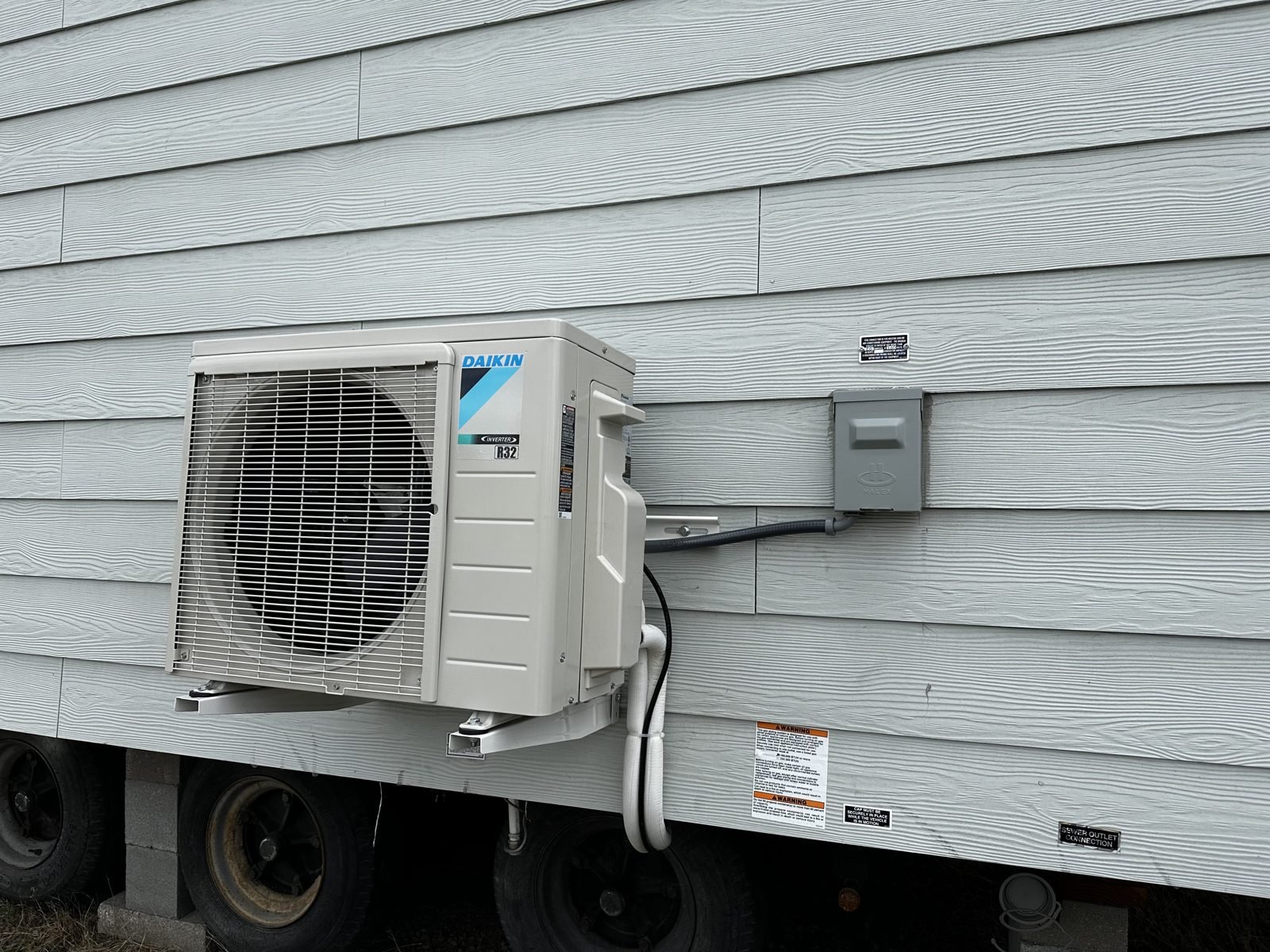
A mini split comes in two parts. There is an outdoor unit, the compact box mounted on a bracket on your exterior wall, and an indoor head, the slim unit up on the wall inside. A thin bundle of refrigerant lines runs between them through one small hole in the wall. That is the whole system. No ducts under the floor, no vents to seal, no equipment sitting in an attic you do not have.
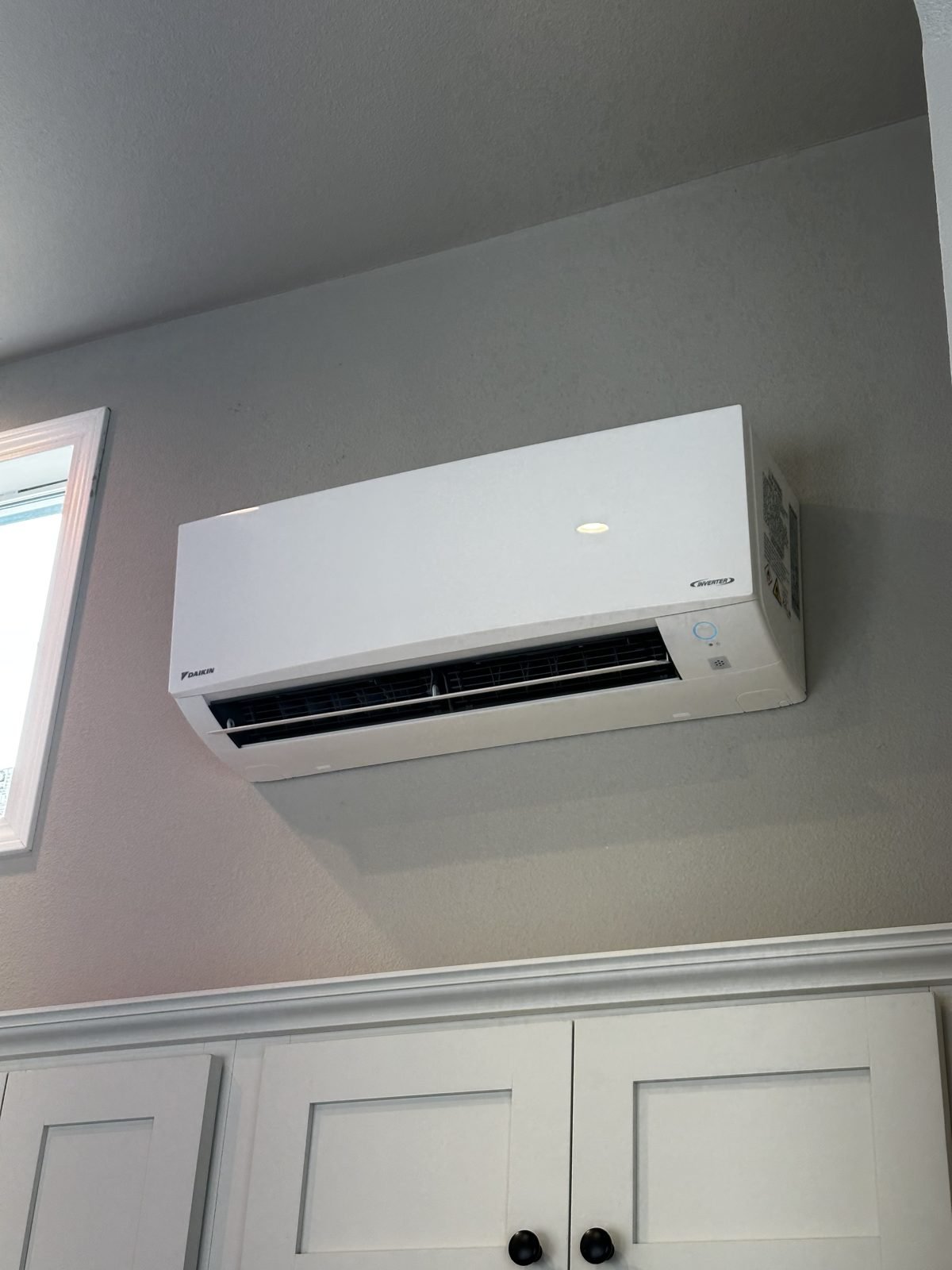
The unit on the homes we deliver is a Daikin inverter running R32 refrigerant. Two things there are worth knowing. "Inverter" means the compressor speeds up and slows down to hold your temperature steady, instead of slamming fully on and then shutting fully off the way older air conditioners do. It draws less power, and it runs quiet. R32 is the newer refrigerant. It carries heat more efficiently and leaves a much smaller footprint if it ever leaks.
It heats and cools, all year
A mini split is also a heat pump, which means the same unit does both jobs. In summer it moves heat out of your home. In winter it runs in reverse and pulls warmth in from the outside air, even when it is cold out there. One system covers the whole year, so you are not running a space heater in January and then dragging a window unit into the frame come July.
Both directions matter in the Northwest. Our summers now get hot enough that opening a window stopped being a real cooling plan. And in winter, a heat pump is one of the cheapest ways to warm a small, well-insulated space, because it moves heat that already exists instead of burning fuel to make more.
One box on the wall, quietly holding a whole tiny home at the temperature you set. That is the entire heating and cooling story.
Why it fits a tiny home so well
- No wasted space. A furnace and its ductwork eat closet and floor space you cannot spare in 400 square feet. A mini split lives on the wall and hands all that room back.
- Even, quiet comfort. One head unit handles an open-plan tiny home with room to spare, and it holds a steady temperature instead of swinging hot then cold.
- Low running cost. A small space plus an efficient heat pump adds up to low energy use, and that shows up on your power bill.
- Almost nothing to maintain. Rinse the outdoor unit now and then, wash the indoor filter every few weeks, and you have done most of the job.
How your home gets ready for one
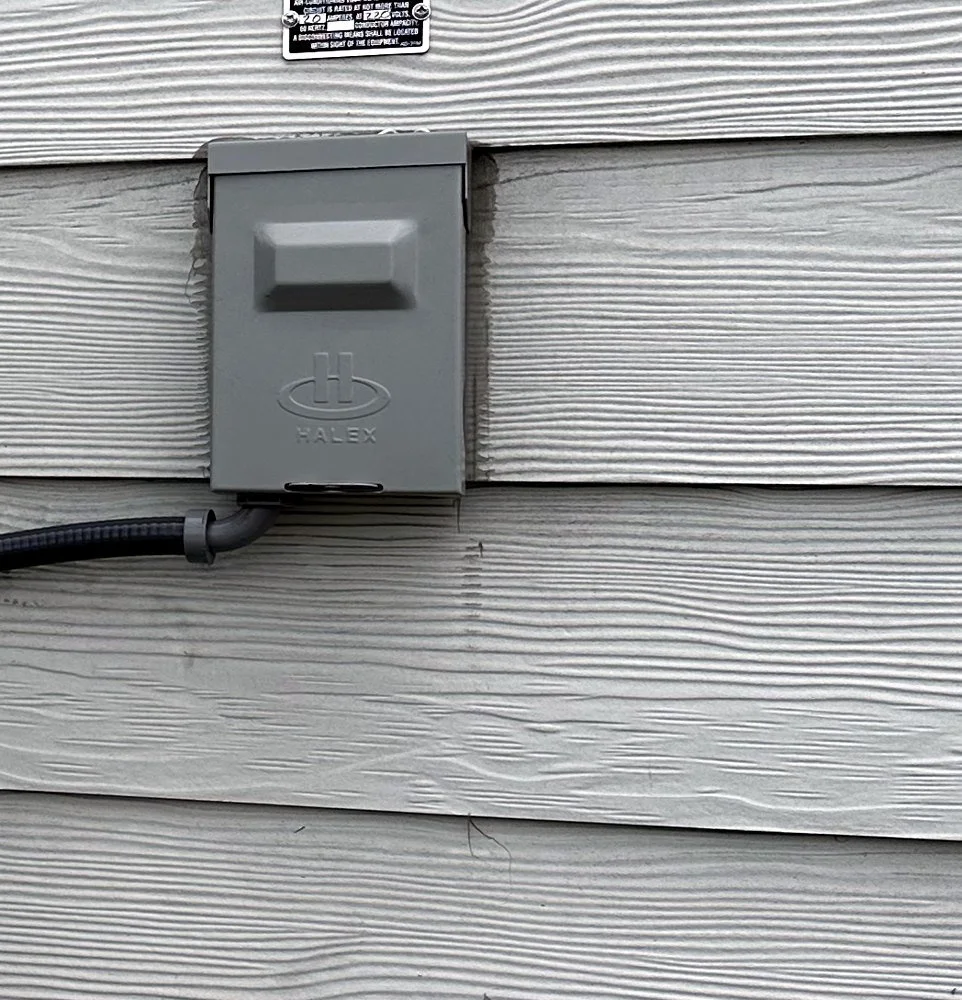
Your home can arrive already set up for it. When you order, you can have it prepped for a mini split at the factory: a dedicated 20 amp electrical disconnect, the shutoff the installer needs, mounted and wired on the exterior wall next to where the outdoor unit goes, before the home ever leaves the line.
Ordering it prepped is the easy path. Your home shows up ready, and the HVAC work becomes a quick mount-and-connect job instead of a wiring project on your site.
Getting it installed
The mini split itself goes in after your home is delivered and set on site. A licensed HVAC tech mounts the two units, runs the refrigerant lines, vacuums the lines out, and charges the system. For a single-zone unit like the ones on our homes, it is a straightforward one-day job for them.
You have two ways to handle it. If you are near our Portland or Snohomish lots, we have HVAC installers we trust and can point you right to them. If you are farther out, we will help you line up a qualified installer in your area, though pricing tends to move around more the farther you get from us.
Plan on roughly $3,000 to $4,000, all in. That covers the mini split unit, the materials, the install itself, and the warranty on the work. The number shifts with your site and your location, so treat it as an estimate to confirm with the installer. It is separate from the home's posted price, which covers the home itself.
A mini split, at a glance
- Heats & cools
- One unit, both jobs, all year
- Ducts
- None
- Inside
- One slim wall-mounted head unit
- Outside
- One compact unit on a wall bracket
- Noise
- Low, thanks to the inverter compressor
- Home prep
- A 20 amp electrical disconnect, added at the factory when you order
- Install
- After delivery, by a licensed HVAC tech
- Typical cost
- About $3,000 to $4,000 all in: unit, materials, install, and warranty (separate from the home price)
- Upkeep
- Wash the filter, rinse the outdoor unit
Come see one in person
The best way to understand how one small unit keeps a whole home comfortable is to stand inside one. Walk through the homes on our Portland or Snohomish lots and ask us about the mini split option. We will show you where it mounts, what your home needs for it, and how the whole thing comes together. Both lots are open Wednesday through Sunday, 11am to 6pm.
Schedule a tourNew to park models? Start with our Buyer's Guide, or browse the homes we carry.
Sources
U.S. Department of Energy, Energy Saver: Ductless Mini-Split Heat Pumps
U.S. Department of Energy, Energy Saver: Duct Sealing (the 20% to 30% duct-loss figure)
Cost figures are estimates you confirm with your installer, not fixed prices. Home prep options and specifications can vary by model and manufacturer. NW Tiny Homes is a park model RV dealer: we sell, deliver, and service homes built by Cavco and Champion.
