

Real living space, without the construction.
A finished, move-in-ready home built on a chassis with wheels and delivered to your property. Once it's professionally set and leveled, it lives like any other small house. Same comfort as a built ADU, fraction of the cost, fraction of the time.
So what actually is a park model tiny home?
It is a fully finished home, 400 square feet or less, built in a factory on a chassis with wheels and delivered directly to your property.
Inside, it looks and feels like a small house. Real kitchen, real bathroom, real bedroom, real plumbing, real electrical. The difference is in how it is legally classified. Because it is built on a chassis to RV standards (called ANSI 119.5), most cities treat it as a recreational vehicle, not a permanent building.
That single classification is what makes everything else work. No residential building permit, no general contractor, no year of construction, no poured concrete foundation. The home arrives on a Tuesday and you can sleep in it that weekend.
Three reasons the numbers work out.
The same square footage, but the rules are different. Here is what changes.
Affordable
A turnkey park model lands between $50,000 and $110,000. A comparable backyard ADU runs $200,000 to $400,000 once you add design fees, permits, foundation, and labor. Building in a factory costs less than building on your lot.
Easy to Place
Park model RVs are classified as RVs, so site setup is straightforward: a level pad with concrete blocks or metal piers, plus standard RV connections for water, power, and sewer. Any local licensed plumber or electrician can help with setup. Most owners are hooked up within days of delivery.
Flexible
The same 400 sq ft works as a guest house, a parent suite, a home office, a short-term rental, a starter home, or one of several units in a small tiny home community. Use it one way today, a different way later.
Park model tiny home vs. traditional ADU.
Both give you a detached, finished living space on your property. Here is where they differ.
Park models are real homes. They are built to ANSI 119.5 code in the same factories that build other recreational vehicles, with the same quality controls. The reason they are faster and cheaper than an ADU is the classification, not the construction.
The Northwest is leading the charge.
Counties across Oregon and Washington are some of the most park-model-friendly in the country, and the rules keep getting better. Zoning still varies by county and city, so check our zoning guide for your exact location before you buy.
Four ways homeowners put them to work.
The home does not change. The role it plays does. Most of our customers fall into one of these.

Affordable Homeownership
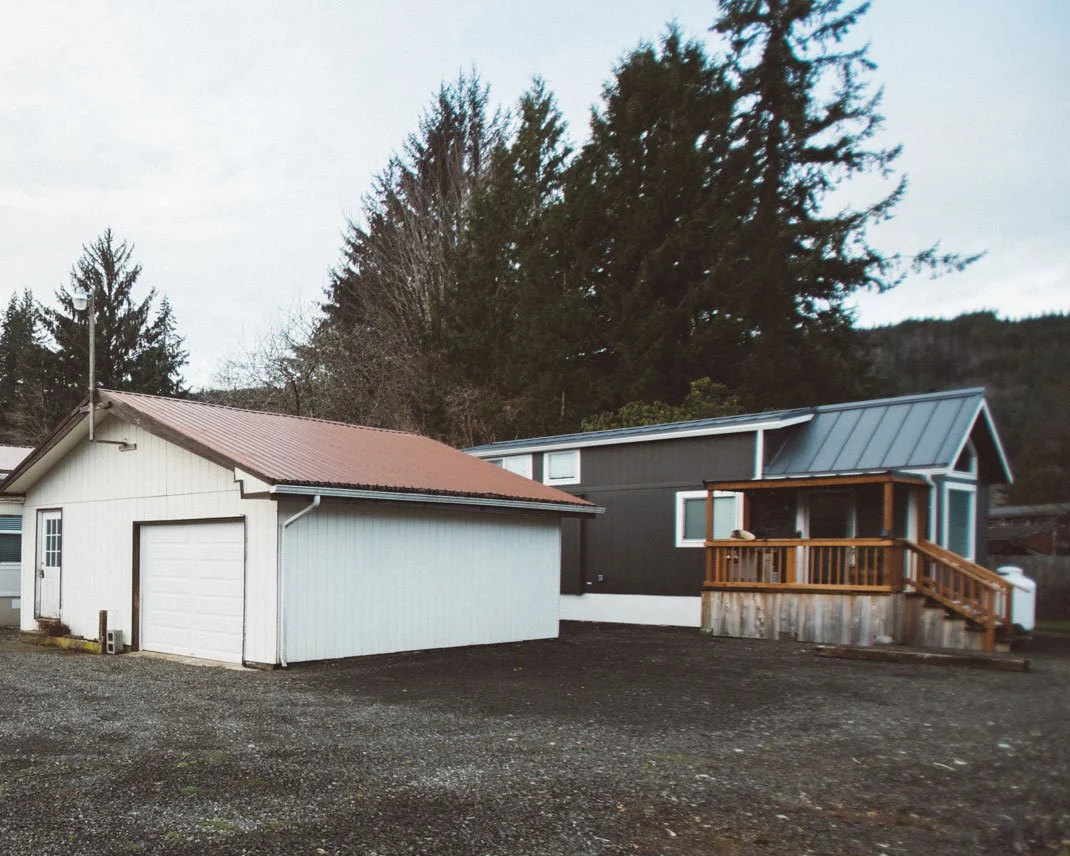
For buyers locked out of the traditional housing market, a park model on owned or leased land is one of the few remaining paths to owning a home. Lower upfront cost, lower utility bills, lower maintenance, no HOA.
You skip the bidding wars and the 30-year mortgage on something you can barely afford. You get a finished home for what others put down as a down payment.
Multigenerational & Flex Space
This is our most common buyer. A private suite for aging parents who want to stay close but keep their independence. A landing pad for adult children priced out of their first apartment. A detached home office that ends the kitchen-table commute.
Same property, more privacy, no remodel. The home arrives finished, you add water and power, and everyone gets their own space without renovating yours.
Read more on multigen living →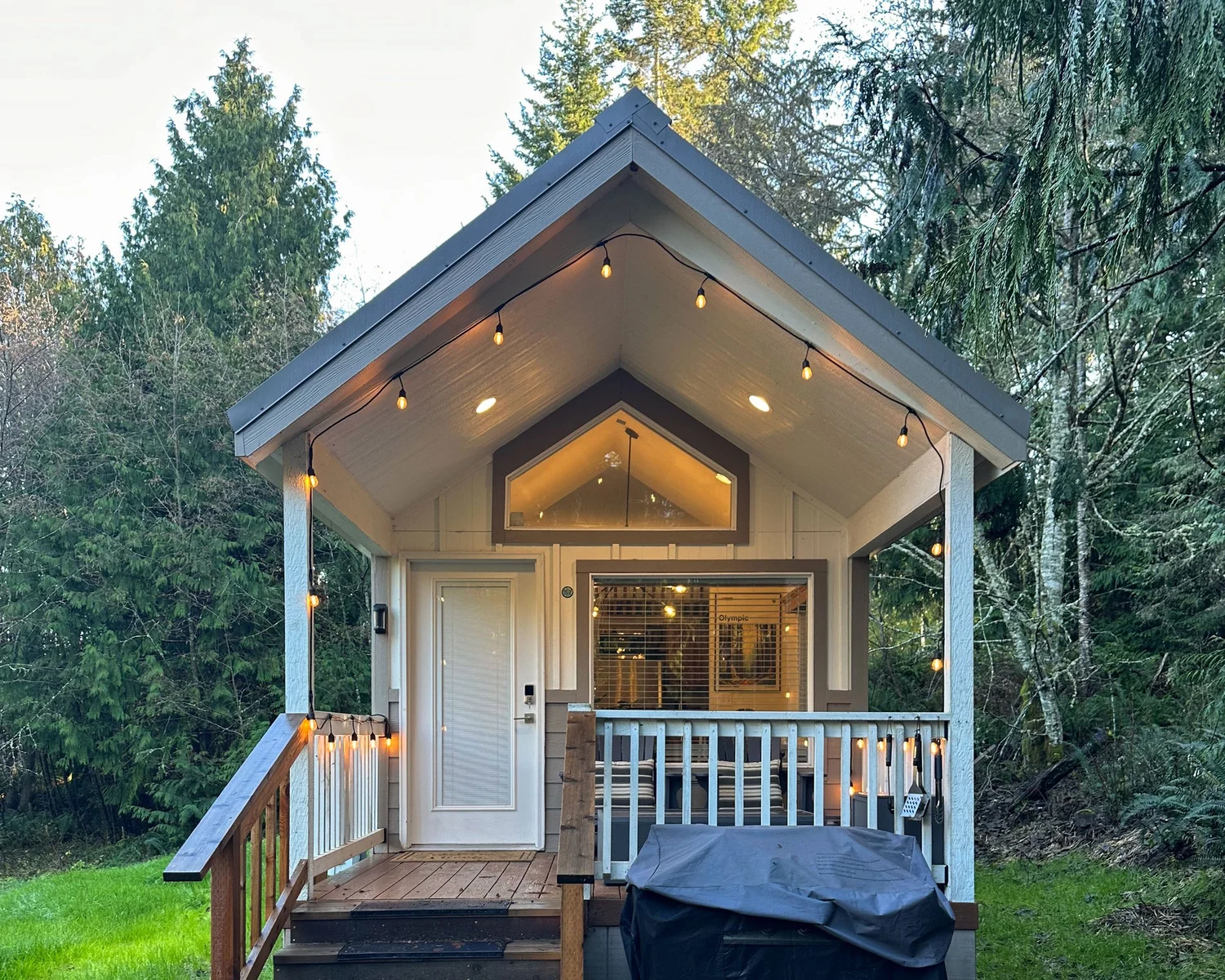
Vacation Homes & Rentals
Drop one on raw land in the Gorge, on the coast, or near Mt. Hood, and you have a getaway to use yourself plus rental income when you are not there. Tiny home stays book well on Airbnb because guests are coming for the tiny home, not just the location.
Lower cost than a cabin. Higher per-night rate than a basic rental. The economics tend to make sense quickly.
Tiny Home Communities
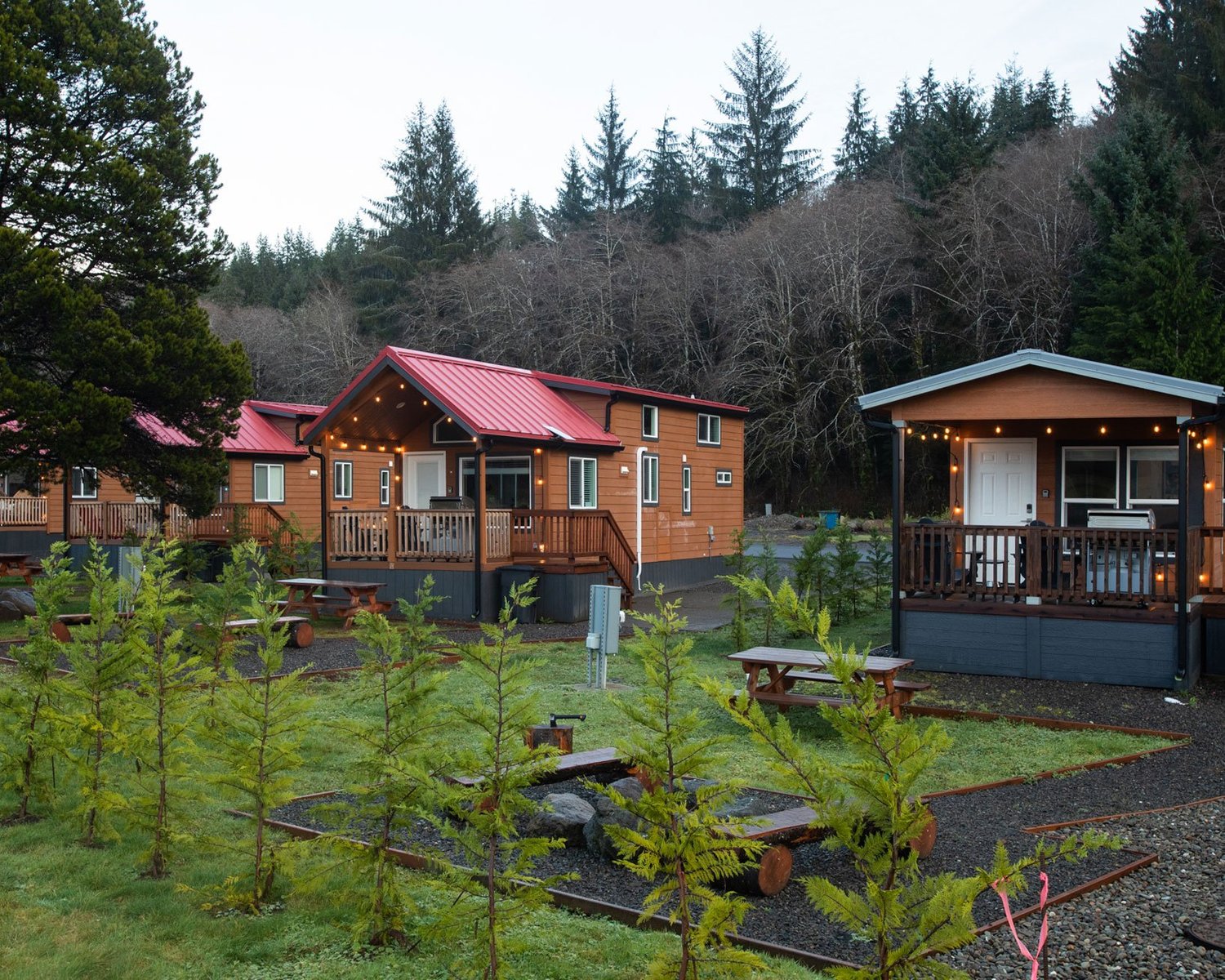
If you own rural acreage zoned for it, a small park model community can produce strong returns on a per-acre basis. Five to ten units on five acres, individually owned or rented, generates revenue that single-family residential cannot match.
Lower per-unit cost. Faster to deploy. Easier to scale than apartments. We have seen owner-operators stand up these communities in under six months.
Things people ask before they buy.
If you do not see your question here, our team is happy to walk you through it. We answer the phone.
Yes, in most of the Pacific Northwest. The rules vary city by city and county by county. Oregon has been ahead of the curve for years, with Portland, much of Multnomah and Clackamas counties, parts of Lane and Deschutes counties all allowing them on residential lots with reasonable conditions. Washington is catching up fast, with laws getting steadily friendlier toward park models as MDU and ADU alternatives. We have researched all 75 counties in OR and WA. Look up your county and city in our zoning guide before you commit.
Park models fit the definition of a tiny house on wheels, but the park model RV code is the one most commonly known and federally regulated thanks to its ANSI 119.5 standard. THOW is a more loosely defined term.
For the most part, every PMRV is a THOW, but not all THOWs are PMRVs. Some cities specifically allow THOWs, and a park model RV should qualify under those rules, though there is no standardized definition across jurisdictions.
Yes. We work with 21st Mortgage Corporation and other independent lenders that specialize in park model loans. Rates are higher than traditional mortgages because the home is titled as an RV, but terms are flexible and approvals are usually quick. Run the numbers in our cost calculator to see what a monthly payment looks like for your situation.
Not in the way an ADU does. Park models are set on a level pad using concrete blocks or metal piers under the chassis, which is a much simpler setup than a poured concrete foundation. The home stays on its wheels and the piers carry the weight. Some jurisdictions or specific properties may require a permanent engineered foundation, in which case diamond piers (engineered cement footings driven into bearing soil) are typically the cleanest path. The unit stays certified to ANSI 119.5 either way.
The full timeline from order to move-in is usually 8 to 14 weeks, with the build itself taking the most time. Park models are built on a chassis with wheels and delivered on those wheels. Once delivered, the home must be professionally set and leveled before you can move in. Setup typically happens in a single day, but you should plan for that step before signing your closing paperwork.
Yes, for most of the country. We deliver across the Pacific Northwest, West Coast, and Central U.S. all the time. East Coast and beyond, cross-country deliveries can be tough due to transport costs, so it's worth running a quick estimate to see if it fits your budget. Run a transport estimate →
The base price includes the home itself with our standard features: oven, fridge, bathroom, hot water heater, and everything you need to live in it from day one. You can also customize the home with upgraded finishes, appliances, and layout options.
Our 2026 pricing breakdown walks through the cost of everything and what to expect.
See one in person, then run the numbers.
Touring a park model in person is the best way to know if one works for your property. We have homes on display in Portland, Oregon and Snohomish, Washington. Walk through, ask questions, no pressure.